I write nonfiction: personal essay, memoir. True stories. This summer, I breezed past the ads for When Words Collide, an annual writing conference in Calgary. “It’s not just for Trekkies,” my mystery novelist, Trekkie friend Susan Calder has been telling me since the conference began three years ago.
I’ve dragged my feet.
When Words Collide bills itself as a festival for readers and writers of all stripes, but a quick glance at the program online confirms my impression: this gathering is aimed at writers of genre fiction, specifically sci-fi and fantasy. An admission: I am a genre snob. I enjoy the occasional mystery novel, but I steer clear of genre fiction. Why? Preference, pretension, and ignorance. As a child, I never finished The Hobbit; as an adolescent, I chose J. D. Salinger over Arthur C. Clarke. These days, not even Margaret Atwood has been able to entice me into the world of speculative writing. Give up an August weekend to hear about the apocalypse, steampunk and the paranormal? No thanks.
A couple of weeks before When Words Collide, Bob Stallworthy asked me to work a shift at the Writers' Guild of Alberta table during the conference, and I agreed. With one toe in the door, I decided to take the plunge and register. I braced myself for costumes and pocket protectors – a weekend visit to an alien planet.
Day One
Behind the safety of the guild’s table, I glance around the lively vendors’ hall. No Vulcan ears, no vampire capes. Across the aisle, a fiddler plays folk tunes behind a stack of self-published books. His smile is friendly, reassuring. My foot taps as I pore over the conference booklet. It turns out to be a busy time at home, so I can only attend a couple of sessions each day. Susan was right: the weekend’s 190 offerings include more familiar territory than I thought. Mixed in with exotic discussions on Urban Green Man, Eve of Destruction, and A Guide to Super Evil are presentations on creativity, revision and the business of writing.
I begin gingerly with the opening night’s keynote speeches. I look for a spot in the back near the exit but S. G. (Sandra) Wong, a fantasy writer I met this spring at Words in 3D, waves at me to join her in the front row. I tell Sandra that among the six Guests of Honour speaking tonight, Shirlee Smith Matheson, a fellow nonfiction writer, is the only one I recognize. Sensing my unease, Sandra launches into a 30-second primer on fantasy. I look over her shoulder as she tweets. Here’s ur gateway #fantasy book @ShaunMHunter. Under Heaven by @guygavrielkay. You’ll love it!
On stage, the speakers take turns reflecting on how they came to be writers and why they write. Rich, familiar territory. David B. Coe goes last. A celebrity in fantasy circles, he talks about the epiphany he had while touring a pueblo in the American Southwest. Hearing about the pivotal and respected role of the storyteller in that culture, he realized he was part of an ancient, honourable tradition. Heady, sustaining stuff these days in a society that considers writing a mostly irrelevant sideshow. At home that night, I make a note to check out Guy Gavriel Kay and David Coe.
Day Two
I gamble on Live Action Slush: The Fantasy Edition. The day before at the WGA table, Shirlee Matheson explained this staple offering at the conference. Writers pile their anonymous first pages on a table and a panel of authors and editors listens as a designated reader reads the excerpts aloud. As soon as the panelists lose interest in the sample, they raise their hands, the reader stops, and the critique begins. Gloves-off editing in public. The panelists’ comments are swift, direct and constructive. Minutes into the session, I dig out my notebook, scrambling to get it all down. No hook, too much background, problems with point of view, over-writing, cliché.
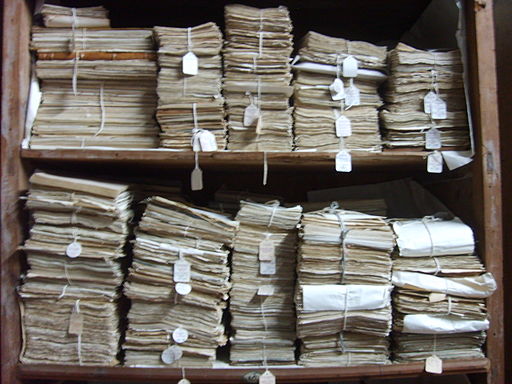
These are the same mistakes I make over and over again in my nonfiction – fault lines on the first page that turn into gaping chasms by the end. It strikes me that I have turned the slush pile into a kind of zombie: something to flee, not face. I hang onto my work instead of submitting it. Some pieces never leave my desk, and, for the essays that do, I too often shelve them after one rejection.
As the room erupts in applause for the writers who offered up their work, I vow to toughen up my fragile artist’s ego. Stare down the slush pile, build up my arsenal of craft, refuse to surrender. Is there a fantasy warrior hiding deep inside me? I make my way through a noisy throng in the lobby toward the next session. Waiting, I read through my notes. Most of the slush panel’s complaints circle around the basics of storytelling: plot, character, tension. I have been reluctant to adopt these building blocks, and not only because they are hard to master. I’m good at what that master of genre fiction, the late Elmore Leonard calls “perpetrating hooptedoodle” – pretty paragraphs and images, literary pirouettes. But figuring out the dramatic arc of a literary essay? It has taken me years to get the hang of that kind of choreography and I am still learning.
I think about what David Coe said about seeing himself as part of a venerable lineage. As an essay writer, I have been hesitant to consider myself a storyteller. I’m more interested in cracking open and puzzling my way through ideas, experience and memory. I am preoccupied with capturing those moments and insights on the page. But Coe calls to mind something the writer Merilyn Simonds once told me about the similarity between fiction and nonfiction: it’s all story. For writers of any genre, thinking about readers – how to hook them on the first page and keep them engaged until the end – is not an optional exercise.
For the next session, I choose a cross-genre, nuts-and-bolts topic: Building an Audience, Online and Off. From my seat near the front of the room, I look for the presenter, Robert J. Sawyer, a Canadian sci-fi rock star. A bald, middle-aged man in a black bowling shirt and sensible brown shoes stands in front of the lectern. Behind me, a woman whispers, “Who is this guy?” Sawyer hears her, too, and like a stand-up comic, riffs on the comment as he begins. I don’t see the telltale large yellow dragon spanning the front of his shirt until he points it out. “The first thing you have to do is identify your audience.” His voice booms. “To do that you have to figure out your mission statement.”
Forget about the dragon. I’ve been beamed to business school. Sawyer says all writers need to think about what they’re doing and who they’re doing it for, especially writers whose work is published by small magazines and presses. “The minimally published,” he calls them. It takes a few seconds to realize he’s talking about me. I lean forward in my seat.
“Once you’ve targeted your audience, you need to convince your readers to spend time with you.” This is common advice at writing workshops and it usually irks me. Make yourself interesting, the publishing experts cajole, as if we’ve time-travelled back to the ‘50s. They might just as well say put on a fresh dress and a slick of lipstick before your husband gets home. Why, as an author, do I have to pretty myself up so my work will sell? Shouldn’t the quality of the writing stand on its own? But Sawyer’s advice has a different, more palatable twist. “There are seven billion people on the planet. Only a few of those will be what I call your appreciative audience.”
The trick is not to cold-call the universe, but to find that small fraction of humanity that constitutes your audience and encourage those people to read your work. “Be yourself,” Sawyer urges, “And make yourself likeable.” His suggestions sound fresh and, better yet, achievable. Of course the writing has to be good: building an audience is about connecting your best work to the right readers. The alternative – leaving polished pieces in a drawer – doesn’t seem that appealing. Sawyer’s common sense flows into the subject of social media. Now, the sci-fi star/business prof sounds like my mother. “Don’t just talk about yourself online. Don’t be a pest. And don’t get into fights.”
Day Three
I attend a panel on plotting. Building narrative, the panelists suggest, isn’t rocket science or magic. It’s about taking a character and cranking up the heat at every turn. Most important, it’s about sticking with a story until you finish it. Some people are plotters who rely on methods and spreadsheets; some fly by the seat of their pants, letting the story lead the way. Others are quilters, patching individual pieces together into a whole. Another light bulb. I am a quilter. Just saying it brings a whoosh of release. My writing process is messy and time-consuming: it takes piles of freefall before I discover what an essay is really about, and then endless stitching, ripping apart and stitching up all over again. I’d always hoped one day to tidy my approach up. But if writing essays relies on wandering, then quilting a text is an essential attribute. Instead of resisting the way I work, why not embrace it? I am a quilter. The words are surprisingly easy to say.
After one more round of live action slush (the mystery edition), I drive away feeling unusually light of heart. Often, writing conferences can leave me glum and a little edgy. This time, instead of a lesson in scarcity – the wearying reminder that there aren’t enough goodies to go around at the publishing party – I have a sense of abundance. Even the newbie authors I met were talking about their work, not as single, one-off books, but as trilogies and series. They chat about sales in the hundreds and thousands. I know like me, they struggle to pin their stories to the page, but I detected delight in their voices, an exuberance about connecting their work to readers.
At When Words Collide, I didn’t sell any WGA memberships (sorry, Bob). Instead, I took away the sense that my home planet of literary writing can be a hushed, hazy and occasionally gloomy place. The air in the world of genre writers feels crisp and clear by comparison. In this realm, the slush pile doesn’t look like a monster to be feared. And the box of storytelling tools sits there, wide open and mine for the taking.
Next year, When Words Collide runs from Aug 8 to 10, 2014 in Calgary, Alberta.